Tuesday, May 6, 2014

ዛሬ በኦሮሚያ ክልል በደምቢዶሎ ከተማ ሕዝብ ላነሳው ጥያቄ የመንግስት ምላሽ ጥይት ሆነ፤ ውጥረቱ ቀጥሏል

(ዘ-ሐበሻ) የአዲስ አበባ ከተማ አስተዳደርን አዲሱን ማስተር ፕላን በመቃወም በኦሮሚያ ክልል የተለያዩ ትምህርት ተቋሞች ውስጥ የተነሳው ተቃውሞ እየተቀጣጠለ በተለያዩ ከተሞች እየተዛመተ ሲሆን በዛሬው ዕለት በደምቢዶሎ ከተማ በተደረገ የተቃውሞ ሰልፍ ላይ የመንግስት ወታደሮች የሃይል እርምጃ መውሰዳቸውን  የዘ-ሐበሻ ምንጮች ከስፍራው ዘገቡ። እንደምንጮቻችን ዘገባ ከሆነ ደምቢዶሎ ከተማ የመንግስት ወታደሮች በሰልፈኞች ላይ የጥይት እሩምታ ያወረዱ ሲሆን ቁጥራቸው በውል ያልታወቁ ወገኖች መጎዳታቸውንና የህክምና መስጫ ጣቢያዎችም በቁስለኞች መጨናነቃቸውን ዘጋቢዎቻችን ገልጸዋል። በዛሬው ተቃውሞ ምን ያህል ሰዎች እንደሞቱ ምንጮቻችን ያደረሱን መረጃ ባይኖርም ከሌሎች ወገኖች ዛሬ በኦሮሚያ ክልል በደምቢዶሎ ከተማሕዝብ ላነሳው ጥያቄ የመንግስት ምላሽ ጥይት ሆነ፤ ውጥረቱ ቀጥሏል  ባገኘነው መረጃ የአንዲት ለጊዜው ስሟና ማንነቷ ያልታወቀ ሴት ልጅ ሕይወት ጠፍቷል።ከአዲስ አበባ 650 ኪሎ ሜትር ርቀት ላይ በምትገኘው ደምቢዶሎ ከተማ ያለው ውጥረት ይህ ዜና እስከተጠናቀረበት ጊዜ ድረስ አልበረደም።
ይህ በእንዲህ እንዳለ መንግስት “አዲስ አበባን እና የኦሮሚያ ልዩ ዞንን በልማት ለማስተሳሰር የተዘጋጀው የጋራ ማስተር ፕላን ልዩ ዞኑን ብሎም አጠቃላይ የኦሮሚያን ክልል የበለጠ ተጠቃሚ የሚያደርግ ነው” ሲል ገለጸ። መንግስት በምእራብ ሸዋ ዞን የዞኑ ነዋሪዎችና የመንግስት ተወካዮች ጋር አካሄድኩት ባለው ውይይት “በውይይቱ በዞኑ የተወሰኑ አካባቢዎች ተከስቶ የነበረውን ሁከትና ብጥብጥ ተከትሎ በጠፋው የሰው ህይወትና የንብረት ውድመትን አውግዘዋል” ሲል በሚቆጣጠራቸው ሚድያዎች በኩል ዜናውን አሰምቷል። ይህን ውይይት የመሩት ውይይቱን የመሩት አፈጉባኤ አቶ አባዱላ ገመዳና በምክትል ጠቅላይ ሚኒስተር ማዕረግ የመልካም አስተዳደር ሪፎርም ክላስተር አስተባባሪና የሲቪል ሰርቪስ ሚኒስትር ወይዘሮ አስቴር ማሞ “ማስተር ፕላኑ የኦሮሚያን ልዩ ዞንና የክልሉን ተጠቃሚነት የበለጠ የሚያረጋግጥ ነው” ሲሉ መናገራቸውን የመንግስት ሚድያዎች ዘግበዋል።

Monday, May 5, 2014

open latter to honorable secretary of state John Kerry

May 5/2014
secretary

By Ephrem Madebo (this article reflects the views and feelings of Ephrem Madebo, and Ephrem Madebo alone)
Mr. Secretary, last year when you went to Ethiopia, for the 50th anniversary of the OAU/AU, many Ethiopians including myself expected that your stay in Addis Ababa (other than the jubilee celebration) will include important issues such as human right abuse, torture, freedom, democracy and good governance in Ethiopia. In fact, most of us wanted to see you voice your disagreement with the dreadful human rights record of Ethiopia, or at least rebuke Ethiopia’s dictators whom your department annual report depicts as enemies of liberty, justice and democracy year after year. Mr. Secretary, I remember, in your speech to the AU leaders, you said the following words:
“The United States joins with so many other nations – the Secretary General, Russia, many other friends that are here – all to applaud the remarkable accomplishments, to work together and solve peace, security challenges, trade, defense, democracy, good governance, and human rights”
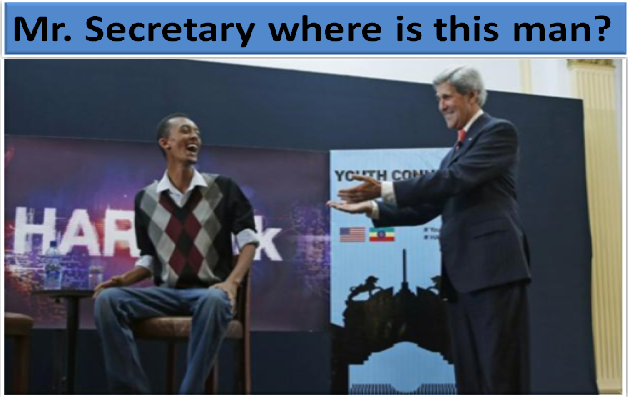
Mr. Secretary, when I read your government’s promise of working together with others to solve peace, democracy, good governance, and human rights challenges in Africa, I was elated and my expectation grew by the day because I know for sure these are the problems that plagued my native country Ethiopia. In May 2013, I was also moved when I saw your picture with Ethiopian blogger Nathaniel Feleke, one of the founders of the renowned Zone –nine bloggers. Mr. Secretary, last week when you went back to Ethiopia, Nathaniel Feleke whom you gave a big hug with chanting smile was being tortured inside the notorious Makelawi prison.
Mr. Secretary, a week ago, a journalist who actually happens to be a friend of Nathaniel Feleke asked you the following very important question:  Is your concern about press freedom real or “just lip service”  Here is how you addressed the question:  “I make clear to Ethiopian officials that they need to create greater opportunities for citizens. To be able to engage with their fellow citizens and with their government by opening up more space for civil society. And we shouldn’t use the anti-terrorism proclamations as mechanisms to be able to curb the free exchange of ideas” Well, Mr. Secretary, if this is not lip service then what?  Besides, what about if the Ethiopian officials are not willing to create greater opportunities for citizens, and instead they keep on arresting and killing innocent citizens like they have been doing since 1991?
Mr. Secretary, a week before your recent visit to Ethiopia started, the Ethiopian regime arrested Blue Party leaders and members. As if this was not enough, just days before your scheduled arrival to Addis, Ethiopia arrested journalists and bloggers, and on April 30 2014 when you were in Addis, the regime killed more than 30 demonstrators and wounded and arrested undetermined number peaceful demonstrators. Mr. Secretary, I still have to hear your public statement on this “In your face” act of the Ethiopian regime that your government has been baby-sitting for more than two decades?
Mr. Secretary, the US government has always been the first to condemn indiscriminate killings by totalitarian regimes around the globe for a long time. In addition to this, the department you lead (the US Department of State), has exposed dictators and human rights violators through its annual human rights reports. But, the US government has abnormally been silent when the TPLF regime has been killing peaceful citizens throughout its twenty two years stay in power.  I wonder how many Ethiopians should die before the US government goes beyond publishing annual reports and starts condemning and holding responsible the killing machine in Addis Ababa!
Mr. Secretary, the most recent killing in Ethiopia that ended the life of more than 30 innocent people took place while you were in Addis having good time with the very people that ordered the killing. Millions of Ethiopians who thought your visit will bring at least a temporary change of heart were staggered by the savage killing. Mr. Secretary, It is not just the killing that took millions of Ethiopians by surprise, it is the calculated timing of the arrest and the killing immediately before and after you set your foot on the soil of Ethiopia. Mr. Secretary, this is a deliberate move by the TPLF leaders who are seeking a divorce from the US and looking for another partner in Asia.
Mr. Secretary, while the people of Ethiopia were mourning their death, we heard that you met with PM Hailemariam Desalegn and Foreign Minister Tedros Adhanom to discuss efforts to advance peace and democracy in the Horn of Africa. Mr. Secretary, to me this is like teaming up with Cuba to advance democracy in Latin America. It’s also ironic that the United States Secretary of State meets with vicious killers to discuss efforts to advance peace and democracy in the Horn of Africa, in a country where more than thirty people were killed by government forces. I have never seen and I don’t think I would ever see again or hear such insensitivity for a loss of humans, especially from a country that reacts vigorously when animals are mistreated by humans.
I remember, during the 2009 Iranian protest, President Obama condemned the violence against the protesters and said the following two statements that have been travelling around the globe ever since he said them:  “It would be wrong for me to be silent” – “The protesters in Iran will be ‘on the right side of history’ ”.  Mr. Secretary, does the President’s silence when more than 30 Ethiopians were killed by the Ethiopian regime mean that – it would be right for him to be silent? What about the protesters in Ethiopia? Are they in the wrong side of history?
Dear Mr. Secretary, its geopolitical location, large population size (Christian & Moslem) and diverse ethnicity has made Ethiopia a strategically placed country in the Horn of Africa. If Ethiopia plays its hand wisely, it can be a critical force for good in the region. Unfortunately, ruthless dictatorships that ruled over Ethiopia for the past 23 years have darkened the fate of their own people let alone playing a positive role in democratizing the Horn of Africa.
We believe the relationship between Ethiopia and the United States has to be reconstituted on the basis of shared values of freedom, democracy, and promotion of mutual interests. To realize this, the United, and other democratic countries need a strong democratic partner in the Horn of Africa. The Horn of Africa is a volatile region characterized by political instability, and it is no secret that the TPLF dictators are one of the architects of instability in the Horn of Africa.
Dear Mr. Secretary, from all of its actions, particularly since 2005, it is clear that the TPLF regime has closed all avenues for a peaceful democratic opposition and is determined to stay in power by force including committing the most heinous crimes against its own people. The extra judicial killings in different parts of the country, the 2005 massacre, and the genocide in Gambella are glaring examples of crimes committed by a regime which once was praised as the “Hope” of Africa.  Today, it is obvious that Ethiopia’s is not and cannot provide a trusted leadership and the democratic credentials to be a credible partner to the United States and the international community at large. The TPLF regime has become an embarrassment to its own people and to the international community. It is high time for the United States and the international community to embrace change in Ethiopia.

Wednesday, April 30, 2014

Zone 9 bloggers must be immediately and unconditionally released

Zone 9 bloggers must be immediately and unconditionally released

30 April 2014
ARTICLE 19 
 ARTICLE 19
ARTICLE 19 condemns the arrest of 6 ‘Zone 9′ bloggers and 3 freelance journalists in Ethiopia, all of whom have been charged with working with foreign organisations that claim to be human rights activists and receiving finance to incite public violence through social media. The journalists and activists should be immediately and unconditionally released. Furthermore, we urge United States Secretary of State John Kerry, who will be visiting Ethiopia on 29 April to prompt the Ethiopian government to release all bloggers, activists and journalists that have been arbitrarily detained.

The arrests came two days after Zone 9 – an independent collective of bloggers who use social media to campaign against political repression – announced their return to activism. Zone 9 had temporarily suspended activities following a period of heightened surveillance and harassment, and the timings of these arrests appear to be a direct attempt to silence their legitimate work and activism.
The six bloggers; Atnaf Berahane, Mahlet Fantahun, Natnael Feleke, Befeqadu Hailu, Zelalem Kiberet, Abel Wabela, and 3 journalists; Edom Kassaye, Tesfalem Weldeyes and Asmamaw Hailegorgis of Addis Gudaymagazine, were arrested on Friday 25 and Saturday 26 April and are being held at Maekelawi detention centre in Addis Ababa.
“These charges are yet more evidence of Ethiopia’s slide towards a complete disregard for human rights. The fact that the bloggers and journalists were hauled to court on a Sunday with no legal representation shows the government’s determination to convict them on trumped up charges,” noted Henry Maina, ARTICLE 19 Eastern Africa Director.
“Coming just a few days before Ethiopia’s Universal Periodic Review at the United Nations and as the country gears up for the May 2015 elections, these arrests send a chilling message that alternative voices are not allowed in the country” added Maina. “We demand their immediate and unconditional release and further urge the Ethiopian government to stop intimidating and harassing journalists and activists.”
In its submission to the UPR, ARTICLE 19 noted that Ethiopia has mostly failed to comply with the recommendations that they accepted during the 2009 review, and the situation for freedom of expression and information has deteriorated rather than improved. State delegates must therefore seize this chance to ask Ethiopia’s government to respect its obligations of protecting and promoting freedom of expression. Specifically, we urge the State parties to call upon the Ethiopian government to stop intimidating, harassing, arresting and detaining journalists, including the Zone 9 group.
On 3 April, Ethiopian immigration officials detained a member of staff from ARTICLE 19′s East Africa office for 29 hours, without access to legal advice or consular support. He was thereafter deported back to Kenya and warned that he would face jail if he returned. ARTICLE 19 was one of the last remaining international human rights organisations working in Ethiopia and providing independent information to the UN Human Rights Council.
WHAT OTHER IFEX MEMBERS ARE SAYING
  • Ethiopia arrests journalists, bloggers: At least nine people rounded up in crackdown ahead of visit by top U.S. envoy 
    “The Ethiopian authorities seem determined to crush any independent source of information, be it in print or online, and local, regional and international press freedom groups have so far failed to halt the ongoing harassment,” IPI Press Freedom Manager Barbara Trionfi said. “There needs to be concerted international pressure from Ethiopia’s donors and partners, including the European Union and the United States, to end the abuse and to pressure the Ethiopian leaders to respect their constitutional and international obligations to respect fundamental rights of media freedom.”
    International Press Institute 28 April 2014
  • Ethiopia: Arrests Upstage Kerry Visit 
    Sources told Human Rights Watch that one of the bloggers and one of the journalists have been regularly approached, including at home, by alleged intelligence agents and asked about the work of the group and their alleged links to political opposition parties and human rights groups. The blogger was asked a week before their arrest of the names and personal information of all the Zone9 members.
    Human Rights Watch 28 April 2014
  • Nine news providers arrested on charge of inciting violence 
    “Jailing journalists and bloggers has the effect of nipping democratic development in the bud. At a time when the situation in Ethiopia is about to be the subject of a Universal Periodic Review by the UN Human Rights Council, we urge the government to respect its national and international obligations to guarantee freedom of information.”
    Reporters Without Borders 29 April 2014

Tuesday, April 22, 2014

Ethiopia’s ‘villagisation’ scheme fails to bear fruit


 in Gambella
April 22,2014
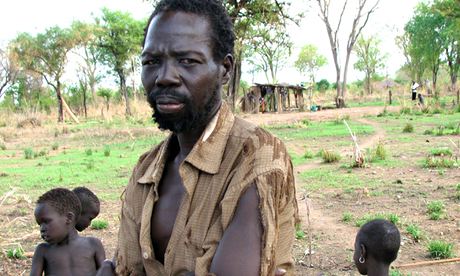
MDG:  Ethiopia's forced villagisation scheme in Gambella provinceIn the village of Elay, people are defying the government and returning home. Photograph: William Davison
The orderly village of Agulodiek in Ethiopia‘s western Gambella region stands in stark contrast to Elay, a settlement 5km west of Gambella town, where collapsed straw huts strewn with cracked clay pots lie among a tangle of bushes.
Agulodiek is a patch of land where families gradually gathered of their own accord, while Elay is part of the Ethiopian government’s contentious “villagisation” scheme that ended last year. The plan in Gambella was to relocate almost the entire rural population of the state over three years. Evidence from districts surrounding Gambella town suggest the policy is failing.
Two years ago people from Agulodiek moved to Elay after officials enticed them with promises of land, livestock, clean water, a corn grinder, education and a health clinic. Instead they found dense vegetation they were unable to cultivate. After one year of selling firewood to survive, they walked back home.
“All the promises were empty,” says Apwodho Omot, an ethnic Anuak, sitting in shade at Agulodiek. There is a donor-funded school at the village whose dirt paths are swept clear of debris, and the government built a hand pump in 2004 that still draws water from a borehole. Apwodho’s community says they harvest corn twice a year from fertile land they have cleared. “We don’t know why the government picked Elay,” she says.
Gambella region’s former president Omod Obang Olum reported last year that 35,000 households had voluntarily moved from a target of 45,000. The official objective had been to cluster scattered households to make public service delivery more efficient. Critics such as Human Rights Watch said the underlying reason was to clear the way for agricultural investors, and that forced evictions overseen by soldiers involved rape and murder. The Ethiopian government refute the allegations.
Last month the London-based law firm Leigh Day & Co began proceedings against the UK Department for International Development (DfID) at the high court after a man from Gambella alleged he suffered abuse when the agency supported the resettlement scheme. Since 2006, DfID and other donors have funded a multibillion-dollar programme in Ethiopia that pays the salaries of key regional government workers such as teachers and nurses through the Protection of Basic Services scheme.
A DfID spokesman said: “We will not comment on ongoing legal action, however, the UK has never funded Ethiopia’s resettlement programmes. Our support to the Protection of Basic Services Programme is only used to provide essential services like healthcare, schooling and clean water.”
Karmi, 10km from Gambella town, is a newly expanded community for those resettled along one of the few tarmac roads. Two teachers scrub clothes in plastic tubs on a sticky afternoon. A herd of goats nibble shrubs as purple and orange lizards edge up tree trunks. There is little activity in the village, which has bare pylons towering over it waiting for high-voltage cables to improve Gambella’s patchy electricity supply.
The teachers work in an impressive school built in 2011 with funds from the UN refugee agency. It has a capacity of 245 students for grades one to five – yet the teachers have only a handful of pupils per class. “This is a new village but the people have left,” says Tigist Megersa.
Kolo Cham grows sorghum and corn near the Baro river, a 30-minute walk from his family home at Karmi. The area saw an influx of about 600 people at the height of villagisation, says Kolo, crouching on a tree stump, surrounded only by a group of children with a puppy. Families left when they got hungry and public services weren’t delivered. “They moved one by one so the government didn’t know the number was decreasing,” he says.
The Anuak at Karmi have reason to fear the authorities, particularly Ethiopia’s military. Several give accounts of beatings and arrests by soldiers as they searched for the perpetrators of a nearby March 2012attack on a bus that killed 19. The insecurity was a key factor in the exodus, according to residents.
As well as the Anuak, who have tended crops near riverbanks in Gambella for more than 200 years, the region is home to cattle-herding Nuer residents, who began migrating from Sudan in the late 19th century. Thousands of settlers from northern Ethiopia also arrived in the 1980s when the highlands suffered a famine. The government blamed the bus attack on Anuak rebels who consider their homeland colonised.
David Pred is the managing director of Inclusive Development International. The charity is representing Gambella residents, who haveaccused the World Bank of violating its own policies by funding the resettlement programme. An involuntary, abusive, poorly planned and inadequately funded scheme was bound to fail, he says. “It requires immense resources, detailed planning and a process that is truly participatory in order for resettlement to lead to positive development outcomes,” he adds.
Most of flood-prone Gambella, one of Ethiopia’s least developed states, is covered with scrub and grasslands. Inhospitable terrain makes it difficult for villagisation to take root in far-flung places such as Akobo, which borders South Sudan. Akobo is one of the three districts selected for resettlement, according to Kok Choul, who represents the district in the regional council.
In 2009, planners earmarked Akobo for four new schools, clinics, vets, flourmills and water schemes, as well as 76km of road. But the community of about 30,000 has seen no change, says 67-year-old Kok, who has 19 children from four wives. “There is no road to Gambella so there is no development,” he says. One well-placed civil servant explains that funds for services across the region were swallowed by items such as daily allowances for government workers.
A senior regional official says the state ran low on funds for resettlement, leading to delivery failures and cost-cutting. For example, substandard corn grinders soon broke and have not been repaired, he says. The government will continue to try to provide planned services in three districts including Akobo this year and next, according to the official.
However, the programme has transformed lives, with some farmers harvesting three times a year, says Ethiopia’s ambassador to the UK, Berhanu Kebede. The government is addressing the “few cases that are not fully successful”, he says. Service provision is ongoing and being monitored and improved upon if required, according to Kebede.
At Elay, Oman Nygwo, a wiry 40-year-old in cut-off jeans, gives a tour of deserted huts and points to a line of mango trees that mark his old home on the banks of the Baro. He is scathing about the implementation of the scheme but remains in Elay as there is less risk of flooding. There was no violence accompanying these resettlements, Oman says, but “there would be problems if the government tried to move us again”.

Tuesday, April 8, 2014

EU Parliament Decries Ethiopian Human Rights Violations (VIDEO)

Violations (VIDEO)

hearing-at-EU-House-of-Parliament
APRIL8,2014
Somalilandsun – European Parliament opened hearing about the Ogaden Human Rights violations and the Ethiopian prisons in Addis Ababa. The hearing,which was invited to participate in the Ogaden whistle-blower ,Abdullahi Hussein, and Swedish Journalist,Martin Schibbye,was held on April 2nd by the group the progressive Alliance of Socialist and Democrats in European Parliament and Committee to Protect Journalists (CPJ).
“Ethiopia is one of the largest humanitarian and development aid receiver yet these donations are used incorrectly and corruptly.Western governmental Organizations and Western Embassies to Addis ababa ignored the stolen donations and humanitarian aid that are being used as a political tool by the Ethiopian regime,which is contrary to EU rules on the funding”,said Anna Gomes,MEP Head of international Unit party Socialist democrat.
Marita Ulvskog,MEP,in her part first thanked Abdullahi Hussein and Swedish Journalist,Martin Schibbye speaking about the steps needed to be taken in order to stop the human rights abuses that is being committed against Ethiopian and Ogaden civilians,she said that the EU could use sanctions or words against Ethiopia or follow up documents and information like the one provided by Abdullahi Hussein to show the reality in the ground.
Ogaden and Ethiopian hearing conference at EU House of Parliament.Ogaden and Ethiopian hearing conference at EU House of Parliament.
Abdullahi Hussein,who is the former regional Presidential adviser and head of the media in Ogaden presented a shocking footage that changed the EU’s view towards Ethiopia.
Abdullahi Hussein,who gained the title of “brave man” and nominated of the prize of Sweden’s civil courage of the year 2014, “Antigone award”, after he had put himself at risk for smuggling out over 100 hours of footage from the Ogaden Province requested the EU to put their words into action as the killing,gang-raping,and extrajudicial arresting still continues.
Speaking with Ogaden diaspora owned TV service of Ilaystv, Martin Schibbye stated that in conjunction with Abdullahi Hussein their purpose to reset was to tell the World what they had seen which is to fulfill a promise that he made to many people from Ogaden region,but also their co-prisoners in Kality Prison of Addis Ababa.Members of European Parliament,CPJ’s Jean Paul Marthoz and Human Rights’s Leslie Lefkow have also explained the human rights situation in Ethiopia in details to the EU Parliament.
Anna Lindy,chair of the hearing, presented the human rights situation in Ogaden and Ethiopia at the opening time of the session.By Ahmed Abdi
http://www.youtube.com/watch?feature=player_embedded&v=fQCpbTpESRk


Sunday, April 6, 2014

ሰበር ዜና - ኢህአዲግ/ወያኔ የኖርዌይ ዜግነት ያለውን ትውልደ ኢትዮጵያዊ የቀድሞ የጋምቤላ ክልል አስተዳዳሪ ኦኬሎ ኦቻላን ከደቡብ ሱዳን ጋር በመተባበር ጠልፎ ወደ ኢትዮጵያ በመውሰዱ ከኖርዌይ መንግስት ጋር ዲፕሎማሳዊ ፍጥጫ ውስጥ ገብቷል።ኢህአዲግ/ወያኔን ''ድንበር ተሻጋሪ አሸባሪ'' ለመሆኑ ይህ በቂ ማስረጃ ነው የሚሉ አሉ።


የቀድሞው የጋምቤላ ክልል ፕሬዝዳንት ኦኬሎ ኦቻላን  በታህሳስ/1996 ዓም (ዲሴምበር 13/2003 እ አ አቆጣጠር) በጋምቤላ በተፈፀመው ጭፍጨፋ ወቅት ከሀገር መውጣታቸው እና በተለያዩ ሃገራት ከኖሩ በኃላ ወደ ኖርዌይ በመምጣት ዜግነት ማግኘታቸው ይታወቃል።

ሐሙስ መጋቢት 25/2006 ዓም ከ 150 ዓመት በላይ በሕትመቱ ዓለም መቆየቱ የሚነገርለት የኖርዌይ ቁጥር አንድ ተነባቢ ጋዜጣ ''አፍተን ፖስተን'' ''ትውልደ ኢትዮጵያዊው ኖርዌጃዊ ከደቡብ ሱዳን ወደ ኢትዮጵያ ካለፈቃዱ ተወሰደ''  በሚል አርዕስት ስር ባስነበበው ዘገባ  ስር ጋዜጣው ዜናውን ሲቀጥል '' የሰብአዊ መብት አክቲቪስት'' በማለት የጠራቸውን አቶ ኦከሎ ኦቻላ  በደቡብ ሱዳን መንግስት ባለስልጣኖች አጋዥነት  ወደ ኢትዮጵያ ተወስደው እንዲታሰሩ መደረጋቸውን እና ኖርዌይ ጉዳዩን አዲስ አበባ በሚገኘው ኢምባሲዋ እየተከታተለች መሆኗን ጋዜጣው ያብራራል።

ሚስተር ስቫየን ሚቸልሰን የኖርዌይ የውጭ ጉዳይ ሚኒስትር የኮምንኬሽን ጉዳዮች አማካሪ ስለ ጉዳዩ የሚከተለውን ብለዋል ''He confirmed that Aquai (ኦኬሎ) is a Norwegian citizen and that UD is familiar with the matter . The Norwegian Embassy in Addis Ababa now assisting Aquai''

''Han bekrefter at Aquai er norsk statsborger og at UD er kjent med saken. Den norske ambassaden i Addis Abeba bistår nå Aquai, opplyser Michelsen, som ikke ønsker å si noe mer om saken.''

'' ኦኮሌ የኖርዌይ ዜግነት ያለው ግለሰብ ነው።የኖርዌይ የስደተኞች ጉዳይ ቢሮ (UD) የእርሱን ጉዳይ በሚገባ ያውቀዋል።አዲስ አበባ የሚገኘው የኖርዌይ ኤምባሲ ለኦኬሎ ድጋፍ እያደረገ ነው''  ሲሉ  ባጭሩ ማብራራታቸውን ጋዜጣው ያትታል።

በመጨረሻም ጋዜጣው ኦኬሎ በሰብአዊ መብት ጥሰት በደረሰባት ጋምቤላ በነበረው ችግር መሰደዳቸውን ገልጦ የደቡብ ሱዳን የፀጥታ ኃይሎች ግለሰቡን ከደቡብ ሱዳን እና ዑጋንዳ ድንበር መካከል መወሰዳቸውን ያብራራል።

ጉዳዩን  እዚህ ኖርዌይ ውስጥ የተመለከቱ ተንታኞች ኢህአዲግ/ወያኔን ''ድንበር ተሻጋሪ አሸባሪ'' ለመሆኑ  በቂ ማስረጃ  መሆኑን ይስማማሉ።
በእርግጥም ነገሩን ስናጤነውም ኖርዌይ በጋምቤላ ጉዳይ የመግባት እድሏን በሰፊው የሚከፍትላት ከመሆኑም በላይ ዜጋዋን በነፃ በማስለቀቁ ሂደት ላይ ከኢህአዲግ/ወያኔ ጋር ያለውን ዲፕሎማሲያዊ ግንኙነት በፍጥነት ሊያሽቆለቁል  እንደሚችል ብዙዎች ያምናሉ።
ኢህአዲግ/ወይኔ እጅግ ከሚፈራቸው እና  ''ስስ ብልቶቹ'' ተብለው ከሚጠቀሱት ጉዳዮች አንዱ የጋምቤላው እልቂት ሳብያ በአለም አቀፍ ፍርድ ቤት የመከሰስ እድሉ ሰፊ የመሆኑ እውነታ መሆኑ ይታወቃል።

ጉዳያችን
መጋቢት 26/2006 ዓም
ኦስሎ፣ኖርዌይ

የ ''አፍተን ፖስተን'' ጋዜጣ ከጉዳዩ ጋር በተያያዘ ያወጣውን ዘገባ ዕትም ከእዚህ በታች ይመልከቱ